


Download the 2025 Report



2026 Carter’s, Inc. All rights reserved.


planet


energy & emissions
Climate action plays a crucial role in addressing our approach to priority initiatives, such as raw material sourcing and supply chain resilience. The efforts we are taking to mitigate climate change support our human rights and responsible sourcing initiatives. As such, our approach to emissions reduction spans our operations, supply chain, and product life cycle. We set targets validated by the Science Based Targets initiative (SBTi) to reduce absolute Scope 1 and 2 greenhouse gas (GHG) emissions 50% by 2030 versus a 2019 baseline, while also requiring 77% of our purchased goods and services vendors (by spend) to set their own science-based targets by 2027. To strengthen accountability, we prioritize gathering primary GHG data and obtain third-party limited assurance for our Scope 1 and 2 emissions, water usage, and waste volume disclosures.
In 2025, we continued to prepare for increasingly stringent regulatory requirements and growing stakeholder expectations around emissions transparency.
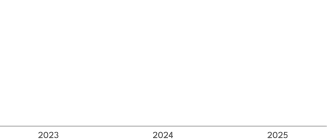
total emissions16 (metric tons CO2e)


16
Values for total emissions reflect RECs purchased for the respective calendar years 2023-2025.
carter’s emissions sources by scope
SCOPE 2
INDIRECT
purchased
electricity usage
SCOPE 1
DIRECT
fuel combustion,
fugitive emissions
SCOPE 3
INDIRECT
upstream and downstream
value chain emissions17
stores, distribution centers, and corporate offices controlled by carter’s
17
Value chain emissions include purchased goods and services, fuel and energy-related activities, upstream transportation, processing of waste disposal, business travel, employee commuting, and end-of life treatment of sold products.
pinch to zoom in
scope 1 and 2 emissions
GOAL
Reduce absolute Scope 1 and 2 GHG emissions 50% by 2030 from a 2019 baseline and achieve net zero in our direct operations by 2040
2025 PROGRESS
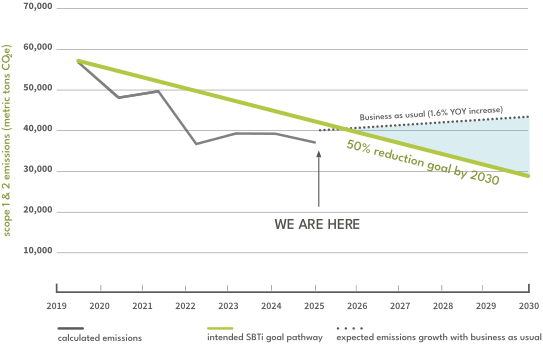
36% reduction of Scope 1 and 2 emissions since 2019



36%
Our approach to reducing direct emissions focuses on operational efficiency, renewable energy credits (RECs), and technologies across our retail locations, distribution centers, and corporate offices.
We believe in order to achieve our 2030 emissions reduction target, our strategy should balance quick-win efficiency improvements with long-term structural changes, designed to maintain business momentum while progressively decarbonizing our operations. In 2025, Scope 1 and 2 emissions decreased by 36% from a 2019 baseline, through direct reduction initiatives such as:
- Completing LED lighting retrofits for over 30 stores
- Upgrading HVAC equipment in our largest distribution center, a 1.1M square-foot facility in Braselton, Georgia, which is expected to reduce our energy usage further in 2026
- Maintaining Leadership in Energy and Environmental Design (LEED) Gold certifications for key facilities, including our Atlanta headquarters and Hong Kong and Vietnam sourcing offices
As a member of the EPA Green Power Partnership for the past three years, we strategically use RECs to complement our direct reduction efforts. Our REC strategy:
- Bridges the gap between current emissions and reduction targets
- Supports development of renewable energy markets
- Provides flexibility as we transition to more permanent solutions
We purchased 10,000 verified credits to supplement our 2025 emissions reduction efforts. Since 2023, we have purchased a total of 44,000 verified RECs.18
18
44,000 RECs is equivalent to 17,315 MTCO2e per EPA’s Greenhouse Gas Equivalencies Calculator.
Historical and expected scope 1 & 2 GHG emissions through 2030
scope 3 emissions
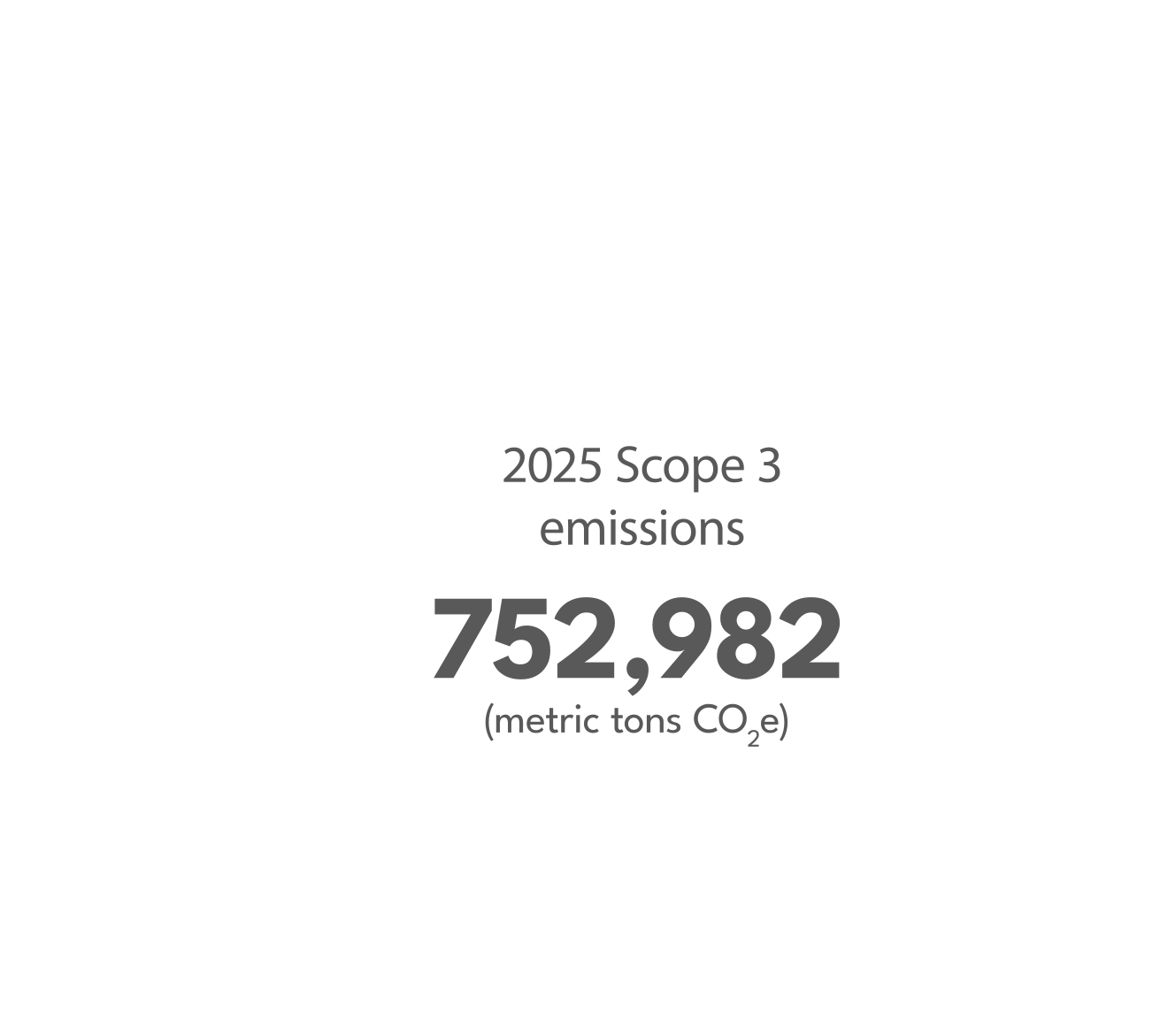
Scope 3 emissions make up the bulk of our GHG emissions, so we have established a supplier engagement target that requires 77% of our purchased goods and services suppliers (by spend) to set science-based targets by 2027. In 2025, we worked with our suppliers to increase data completeness and accuracy by tracking their progress through Cascale’s Higg Facility Environmental Module (FEM). Currently, 69% of purchased goods and services suppliers by spend and 65% of them by count have established such targets, an increase of 11 and 13 percentage points respectively compared to 2024.
GOAL
Require 77% of our purchased goods and services suppliers (by spend) to have science-based targets by 2027
2025 PROGRESS
69% of these suppliers (by spend) and 65% by count have set science-based targets


69%
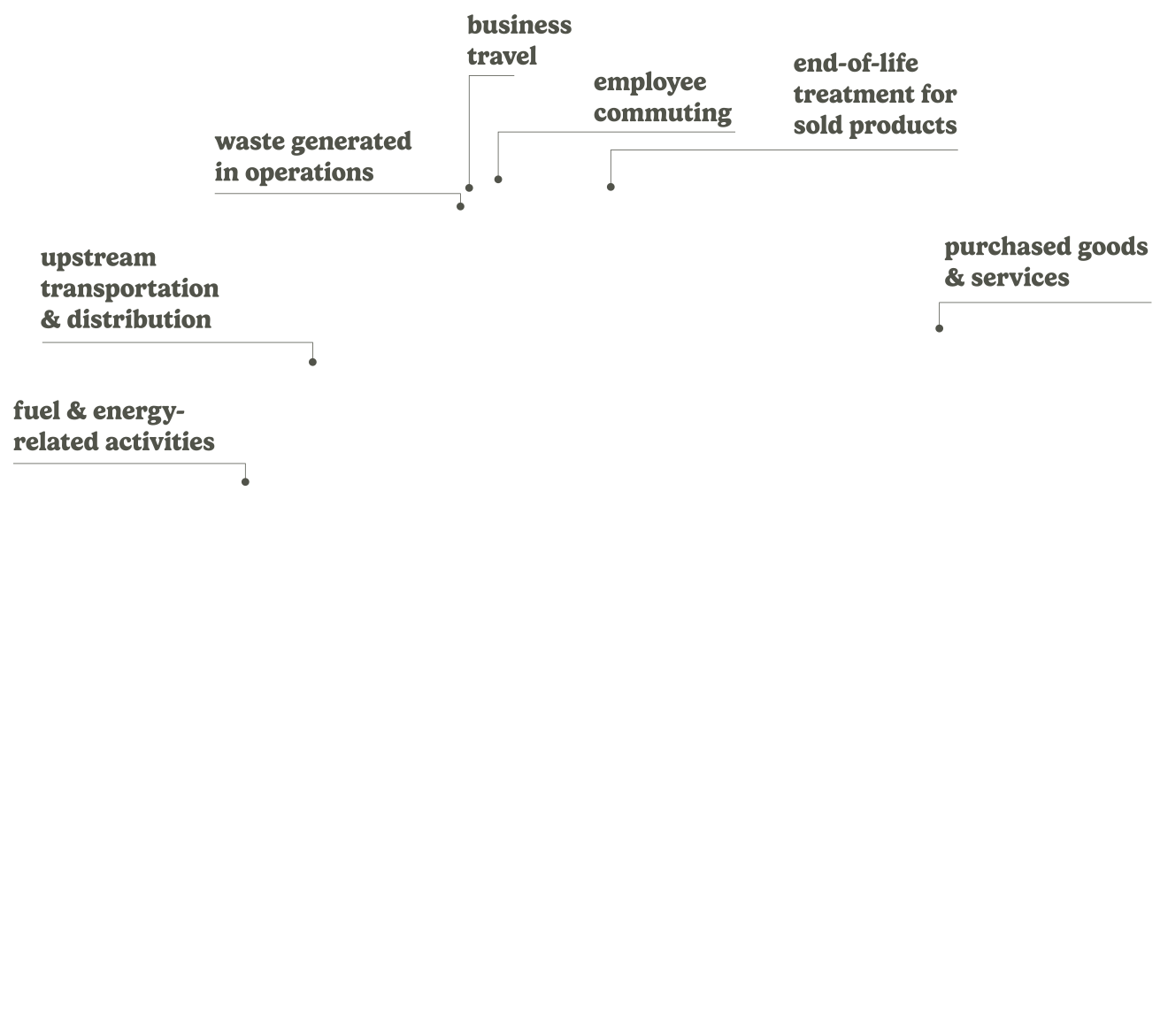

purchased goods and services
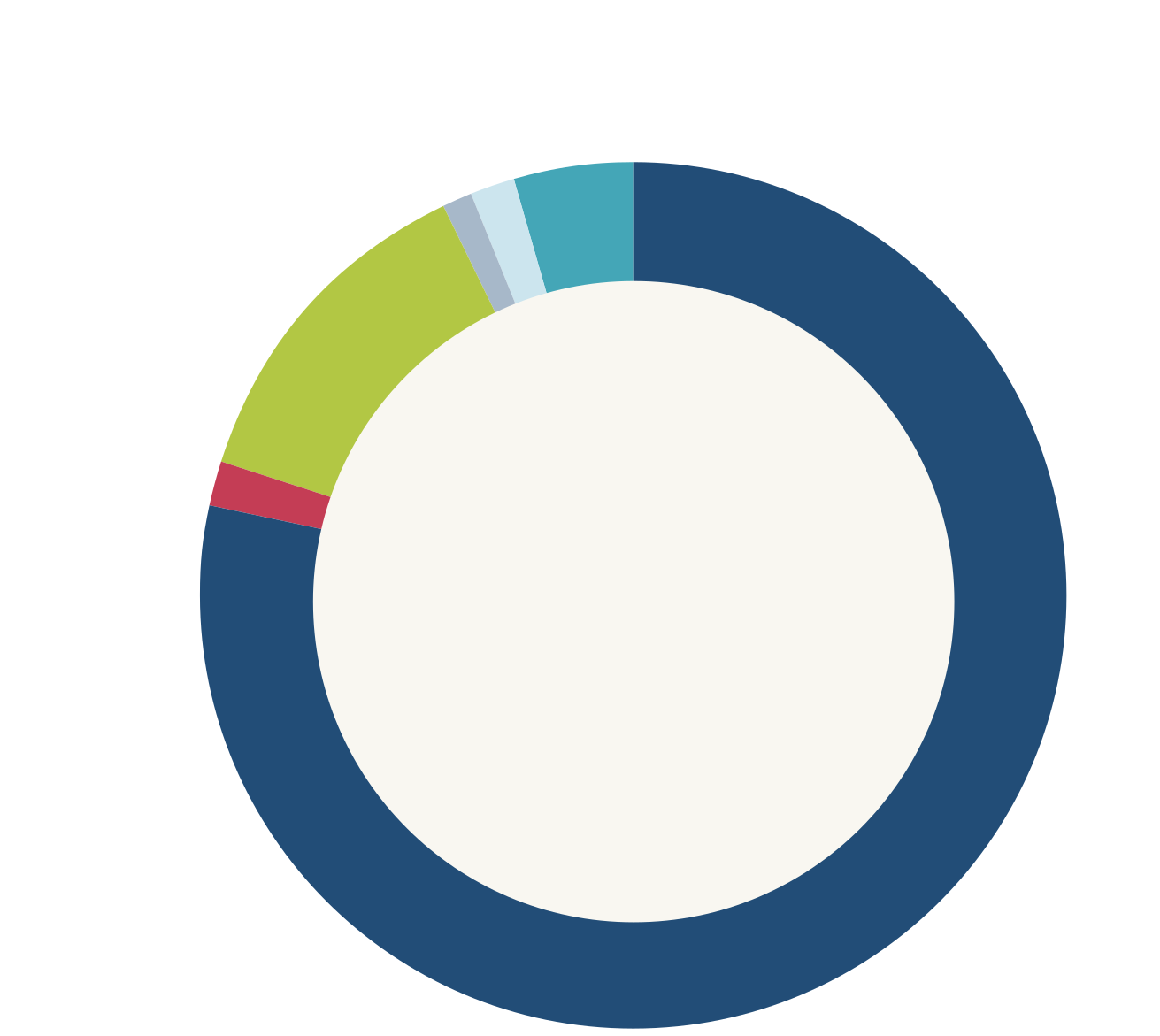
Category 1
591,763 metric tons CO2e

fuel and energy-related activities
Category 3
10,653 metric tons CO2e

upstream transportation
& distribution
Category 4
98,184 metric tons CO2e

waste generated in operations
Category 5
6,679 metric tons CO2e

business travel
Category 6
1,377 metric tons CO2e

employee commuting
Category 7
11,070 metric tons CO2e

end-of-life treatment of sold products
Category 12
33,257 metric tons CO2e
our suppliers
Collecting comprehensive and accurate supplier data is fundamental to managing and reporting our Scope 3 emissions. Historically, we’ve collected data from our suppliers through direct engagement and through industry standard tools to create a holistic picture of our supply chain emissions.
The majority of our Scope 3 emissions come from our Tier 1 suppliers and logistics providers, from whom we are able to collect primary data. This allows us to:
Our logistics providers also share data and emissions reduction opportunities, which can help guide our transportation purchasing decisions. Also, through our RFID technology, we can optimize shipment delivery efficiency and enable real-time tracking and improved inventory management.- Track progress towards our science-based target with increased accuracy
- Identify potential opportunities for improvement of data collection
- Evaluate potential reduction initiatives and improvements undertaken by our suppliers
In 2025, we leveraged the Higg FEM to assess supplier environmental impacts, like energy and water consumption. The Higg FEM also helps us identify ways we can support our suppliers in developing their carbon reduction strategies. In 2025, more than 99% of our Tier 1 and 96% of our Tier 2 suppliers completed the Higg FEM, which included information on their science-based emissions, water, and waste reduction targets.
Additionally, our strategic supplier assessment framework incorporates ESG criteria, including environmental initiatives, worker empowerment programs, and public disclosure. This framework is intended to inform supplier selection and production allocation decisions.
supplier engagement
In 2025, we were pleased to take part in the Environmental Defense Fund Climate Corps® fellowship program. Our summer fellow identified opportunities for us to deepen our engagement with suppliers and help meet our commitment to having 77% of suppliers (by spend) adopt science-based targets by 2027. The fellowship aimed to accelerate progress toward this goal by improving supplier data accuracy, adding sustainability metrics to our vendor onboarding and performance reviews, creating an engagement framework that rewards progress, and equipping sourcing teams with guidance and training. Through this work, we have a path towards strengthening our process for environmental data collection, building a recognition and incentive program for top suppliers, and designing a communications and training plan to equip internal sourcing teams and external vendors to reduce emissions, which we plan to implement in 2026.
life cycle assessment
We anticipate our goal to transition to 100% sustainably sourced cotton by 2030 will reduce GHG emissions from raw materials. To measure this impact, we launched a cradle-to-gate life cycle assessment (LCA) in 2023 on our best-selling product that year—the six-to-nine-month bodysuit five-pack. To expand our understanding, in 2024, we began additional LCA work on our top three best-selling products of the year—girls’ cotton briefs, three-month bodysuit, and set of toddler pants.
In 2025, we piloted two LCA tools that could enable broader, deeper, and more timely assessment of our product portfolio. The pilot covered more than 16 environmental impact categories, including climate change, water use, and land use. We evaluated these impacts across various stages of the chosen products’ life cycles, including raw materials acquisition, manufacturing, distribution, use phase, and end-of-life treatment. These efforts have provided visibility into which stages of a product’s life cycle may be most impactful by category, and we plan to develop targeted disclosure and reduction strategies going forward.
Recognizing the importance of post-purchase impacts in our emissions reduction journey, we include cold-water wash instructions on all care labels to minimize customer energy consumption and its associated environmental impacts.
three-month bodysuit
set of toddler pants
girls’ cotton briefs